

Investing Early vs. Late: How Timing Impacts Your Financial Future

When it comes to building wealth, does it really matter if you start investing early or late? The short answer: yes—but with some nuance. The timing of your investments can dramatically influence your long-term returns, thanks to compound interest, time horizons, and disciplined investing.
In this article, we’ll explore why starting early often gives you a head start, how late investors can still succeed, and the strategies to maximize growth at any stage.
Why Starting Early Matters
Starting your investment journey as early as possible gives your money more time to grow and compound. Even modest contributions made consistently over decades can turn into substantial wealth.
The Power of Compound Interest
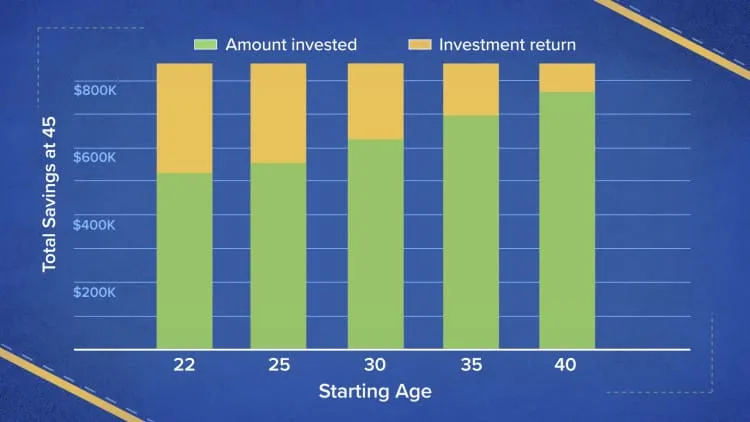
Compound interest, often called the “eighth wonder of the world,” is when your investment earnings generate their own returns. This snowball effect grows exponentially over time. For example:
- John invested $10,000 in an S&P 500 index fund in 1985. By 2023, his portfolio grew to $563,270, benefiting from 38 years of compounding and reinvesting dividends.
The longer your money is invested, the more you can take advantage of this effect. Reinvesting dividends and other earnings accelerates growth, making early investing a powerful tool for wealth accumulation.
Longer Time Horizon
Early investors enjoy a longer time horizon, which allows them to take on slightly higher-risk investments, knowing they have time to recover from market downturns. This flexibility can result in higher potential returns over the long term.
Higher Risk Tolerance
Younger investors can typically handle market volatility better. By starting early, you can hold a larger portion of your portfolio in growth-oriented assets like stocks, maximizing returns while reducing the pressure of short-term market swings.
Financial Discipline
Investing early fosters a habit of regular savings and long-term financial planning. Building this discipline from a young age helps you make smarter money decisions throughout life.
The Costs of Investing Late
Waiting to invest can hinder wealth-building potential. Here’s why:
- Lost Compounding Benefits: Delaying investments reduces the time your money can grow exponentially.
- Reduced Ability to Achieve Goals: Later investors may need to save much more aggressively to reach retirement or major financial milestones.
- Less Recovery Time from Market Volatility: Late investors have shorter time frames to recover from market downturns.
- Larger Contributions Required: Starting late often requires higher monthly contributions to achieve similar results as early investors.
For example:
- Mark, who started investing in 2003 with the same $10,000, ended up with $69,323 by 2023. The shorter 20-year time frame limited compounding growth.
It’s Never Too Late to Start
Even if you start late, disciplined investing can still produce impressive results. The key is consistency, smart contributions, and reinvesting returns.
- Dave started in 2003 with $10,000 but added $1,000 every month to an S&P 500 fund. By 2023, his portfolio reached $1,031,735, outperforming both John and Mark.
Late investors can catch up by:
- Making regular monthly contributions
- Staying diversified across asset classes
- Reinvesting dividends and earnings
- Remaining patient and consistent
Key Reasons to Start Investing Early
- Compound Interest: The longer your money works for you, the greater your potential returns.
- Time Horizon: Early investing allows for riskier, higher-return strategies with less stress.
- Risk Tolerance: Younger investors can afford to recover from temporary losses.
- Sequence of Return Risk: Early investing reduces the danger of withdrawing during market downturns.
- Financial Discipline: Consistent investing builds good money habits and long-term planning skills.
Choosing the Right Brokerage
The first step in investing is selecting a reliable brokerage platform. Some top options for beginners and seasoned investors include:
Plus500
- Best for: Leveraged Trading
- Highlights: Simple interface, mobile and desktop access, CFDs on stocks, indices, commodities, and cryptocurrencies.
- Why Choose: Trusted, regulated, and beginner-friendly for fast, efficient trading.
Interactive Brokers
- Best for: Active and Global Traders
- Highlights: Low-cost trades, global market access, margin trading, and advanced research tools.
- Why Choose: Suitable for beginners and professionals, with comprehensive tools for international trading and portfolio management.
Choosing the right broker helps maximize returns, manage risk, and simplify your investment journey.
Final Thoughts
While early investing gives you a clear advantage, it’s never too late to start. The combination of consistent contributions, disciplined investing, and smart platform choices can help anyone achieve financial growth, regardless of when they begin.