
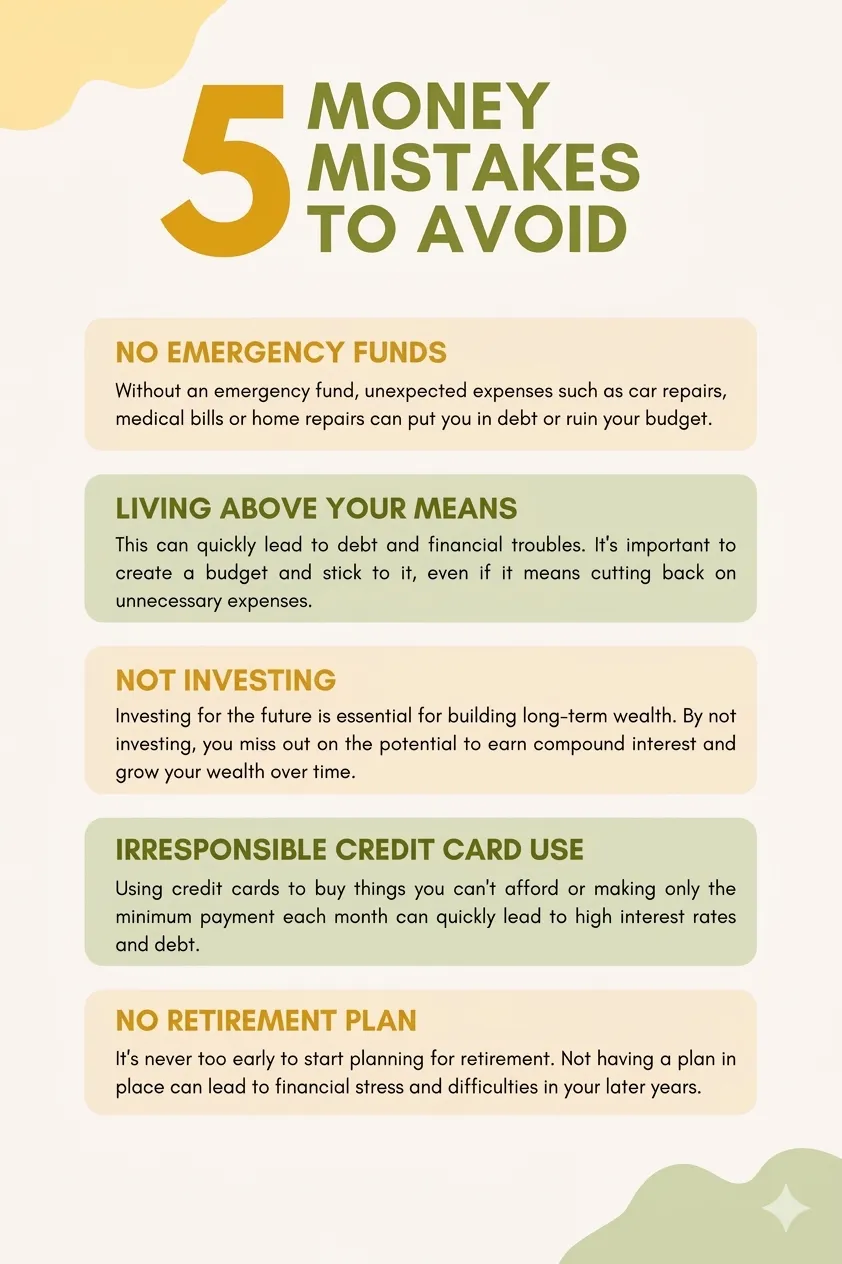
5 money mistakes that keep you from getting rich
Why do some people build wealth over time while others struggle financially? The answer often comes down to habits and decisions.
According to author Thomas Corley, wealthy individuals develop success slowly—like growing trees. Their daily habits compound over time, leading to significant results years later. Meanwhile, common financial mistakes can quietly hold you back from achieving wealth.
In this article, we’ll explore 5 money mistakes that keep you from getting rich—and how to avoid them.

- Trying to Manage Everything Yourself
Handling your finances alone might seem cost-effective, but it can lead to costly mistakes—especially when it comes to investing.
When markets become volatile, emotional decisions can result in significant losses. Wealthy individuals understand this and often rely on professionals such as:
- Financial advisors
- Accountants (CPAs)
- Legal experts
These experts help:
- Reduce risk
- Optimize taxes
- Protect long-term wealth
Key takeaway: Investing in professional advice can actually save you money and improve returns over time.
Handling your finances on your own might seem like a smart way to save money, but it can lead to costly errors—especially when it comes to investing.
During market volatility, emotional decision-making often results in unnecessary losses. That’s why many wealthy individuals rely on professionals such as:
- Financial advisors
- Certified Public Accountants (CPAs)
- Legal experts
These professionals can help you:
- Minimize risk
- Optimize your tax strategy
- Protect and grow long-term wealth
Key takeaway: Investing in expert advice can improve your financial outcomes and save you money in the long run.
- Not Diversifying Your Investments
One of the biggest financial mistakes is putting all your money into a single investment.
Many average investors rely only on:
- Stocks
- Bonds
But wealthy individuals diversify across multiple asset classes, such as:
- Real estate
- Private investments
- Partnerships
Why diversification matters:
- Reduces risk
- Protects against market downturns
- Creates multiple income streams
For example, if the stock market performs poorly, income from real estate or other assets can help balance your portfolio.
Key takeaway: Never rely on one source of income or one type of investment.
Putting all your money into one investment is a major financial risk.
Many average investors focus only on:
- Stocks
- Bonds
In contrast, wealthy individuals diversify their portfolios across multiple asset classes, including:
- Real estate
- Private investments
- Business partnerships
Why diversification matters:
- Reduces overall risk
- Protects against market downturns
- Creates multiple income streams
For example, if the stock market underperforms, income from real estate or other investments can help stabilize your finances.
Key takeaway: Never rely on a single investment or income source.
- Chasing Trends and “Get-Rich-Quick” Opportunities
It’s tempting to jump on the latest investment trend—whether it’s cryptocurrency, hot stocks, or viral opportunities.
However, this “follow the herd” mentality is risky.
Famous investor Warren Buffett emphasizes:
- Invest in what you understand
- Focus on long-term value
- Avoid speculation
Trend-based investing often leads to:
- Emotional decisions
- High risk
- Large losses
Key takeaway: Wealth is built through consistency and knowledge—not quick wins.
- Not Having a Long-Term Financial Plan

Many people focus only on short-term gains without a clear long-term strategy.
Wealthy individuals think differently. They:
- Plan decades ahead
- Set clear financial goals
- Focus on building generational wealth
This includes:
- Investing for retirement
- Estate planning
- Building assets that appreciate over time
Without a plan, it’s easy to:
- Overspend
- Under-save
- Miss investment opportunities
Key takeaway: A clear, long-term plan is essential for building sustainable wealth.
- Panicking During Market Downturns
Market volatility is normal—but panic is costly.
When prices drop, many investors:
- Sell too early
- Lock in losses
- Miss future recoveries
Wealthy investors, on the other hand:
- Stay calm
- Stick to their strategy
- Focus on long-term growth
They also maintain:
- Emergency funds
- Liquid assets
This allows them to avoid selling investments during downturns.
Key takeaway: Emotional control is one of the most important skills in building wealth.
How to Build Wealth the Smart Way
Avoiding these mistakes is just the beginning. To grow your wealth effectively:
- Invest consistently
- Keep learning about finance
- Build multiple income streams
- Surround yourself with knowledgeable people
- Stay disciplined over time