

How to Save Money and Still Enjoy Life: Smart Strategies That Actually Work
Saving money doesn’t mean giving up everything you love. In fact, the real secret to saving money is simple:
Spend less than you earn—while still enjoying life.
Save money and still enjoy life with smart strategies that help you cut expenses, increase income, and build a balanced, stress-free financial lifestyle.
The problem? Most traditional advice focuses on cutting everything fun, which makes it hard to stick with long term. Instead, the key is to spend intentionally, optimize your finances, and increase your income.
In this guide, you’ll learn practical, sustainable ways to save money without feeling restricted.
Why Most People Struggle to Save Money
If you’ve ever tried saving money and failed, it’s not because you lack discipline—it’s because most advice is unrealistic.
Common problems include:
- Cutting too many enjoyable expenses
- Not having clear financial goals
- Ignoring big financial opportunities (like income growth)
- Focusing on small savings instead of big wins
The solution is a smarter, more balanced approach.
Save money and still enjoy life
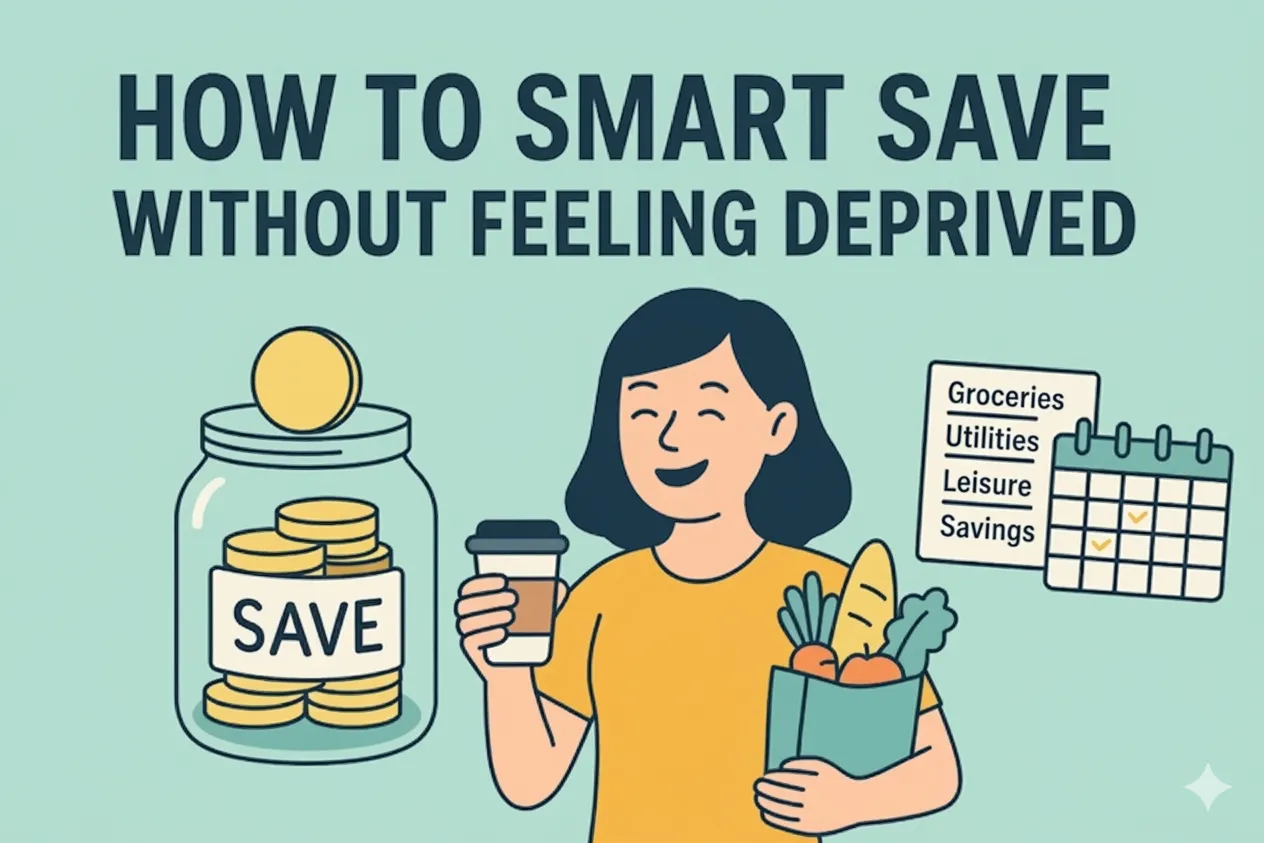
- Build a Budget You’ll Actually Stick To
A good budget shouldn’t feel restrictive—it should feel empowering.
Try the Conscious Spending Plan:
Divide your income into:
- Fixed costs (rent, bills, essentials)
- Savings & investments
- Guilt-free spending
This approach ensures:
- Your essentials are covered
- You’re consistently saving
- You can enjoy your money without guilt
The goal isn’t to stop spending—it’s to spend intentionally.
- Set Clear and Motivating Savings Goals

“Save more money” is too vague to work.
Instead, create goals that are:
- Specific (e.g., $5,000 for travel)
- Emotional (something you truly care about)
- Time-bound
Example:
- Save $3,000 for a vacation in 12 months
- Save $20,000 for a house down payment
When your goal is meaningful, saving becomes easier.
- Track Your Spending and Find “Money Leaks”
Most people don’t realize where their money actually goes.
What to do:
- Review your last 2–3 months of expenses
- Categorize every transaction
- Identify unnecessary spending
Common “money leaks”:
- Unused subscriptions
- Impulse purchases
- Recurring charges you forgot about
Cut what you don’t care about—not what you love.
- Use the Envelope Method to Control Spending
The envelope method helps you stay within budget without feeling restricted.
How it works:
- Allocate money for categories (food, entertainment, shopping)
- Use cash or separate accounts
- Stop spending when the category is empty
This creates awareness and helps you:
- Avoid overspending
- Make more intentional choices
- Automate Your Savings
One of the easiest ways to save money is to remove the need for willpower.
Set up automation:
- Transfer money to savings right after payday
- Automate bill payments
- Contribute to retirement accounts automatically
Treat savings like a non-negotiable expense.
Even starting with $50/month can make a big difference over time.
- Pay Off Debt Faster
Debt can quietly drain your finances through interest.
Example:
A $10,000 loan at 6.8% interest can cost thousands over time.
Smart strategy:
- Focus on high-interest debt first
- Pay more than the minimum
- Add even small extra payments
Paying off debt faster = more money for saving later.
- Create Personal Money Rules
Money rules help you avoid bad decisions without constant effort.
Examples:
- Wait 24 hours before buying anything over $100
- Match every “want” purchase with equal savings
- Remove saved credit card details to reduce impulse buying
The best rules are tailored to your habits.
- Increase Your Income (The Real Game Changer)
There’s a limit to how much you can cut—but no limit to how much you can earn.
Smart ways to earn more:
Maximize employer benefits
- Take full advantage of retirement matching programs
- It’s essentially free money
Negotiate your salary
- Even a small raise can add thousands over time
- Research your market value and ask confidently
Switch jobs if needed
- Job hopping can increase income by 20–50%
Start a side hustle
- Freelancing
- Tutoring
- Design, writing, or online services
Extra income accelerates your savings dramatically.
- Negotiate Your Bills
Many people overpay simply because they never ask for better deals.
What to do:
- Call your providers (internet, phone, insurance)
- Ask for discounts or better plans
- Be willing to switch if needed
A 10-minute call could save hundreds per year.
- Cut Subscriptions Strategically
Subscriptions can quietly drain your budget.
Try the “à la carte” approach:
- Cancel all subscriptions
- Pay only when you actually use something
This helps you:
- Avoid unnecessary recurring costs
- Spend only on what you truly value
- Spend More on What You Love (Yes, Really)
Saving money doesn’t mean cutting everything.
The key rule:
Spend generously on what you love—and cut ruthlessly on what you don’t.
For example:
- Love travel? Spend more there
- Don’t care about gadgets? Cut them completely
This creates a balance between:
- Enjoying life
- Building wealth
Why Smart Saving Beats Extreme Frugality
Many people fail because they rely on restriction-based strategies.
The truth:
- Cutting coffee won’t change your life
- Increasing income and reducing big expenses will
Focus on big wins, not small sacrifices.
How to Choose the Right Strategy for You
There’s no one-size-fits-all approach.
Start simple:
- Pick one strategy (automation, budgeting, or cutting subscriptions)
- Build momentum with small wins
Focus on your biggest problem:
- Overspending → use money rules
- Low income → increase earnings
- High bills → negotiate costs
Scale gradually:
- Increase savings over time
- Add new strategies as you grow